Why You Feel Drained at Home: Feng Shui Solutions for Better Energy
This is a subtitle for your new post
Summary
Feeling drained at home even when life is objectively fine is more common than most people realize, and it has a spatial explanation. The Drain block is caused by broken items, unloved objects, and unfinished projects that place a persistent load on the nervous system. This post names what it looks like, why it happens, and the 10-minute shift that helps.
Key Highlights
- Identify the Drain block through persistent fatigue and low energy at home.
- Recognize broken items and unfinished projects as energy drains.
- Understand why the nervous system tracks incomplete items without conscious awareness.
- Apply the 10-minute shift to reduce attentional load and restore energy.
- Discover when recurring fatigue signals a deeper spatial issue needing assessment.
You checked every box this week. Life by any objective measure is fine. Yet the moment you walk through your front door, something pulls you down. Not sadness. Not stress. Just a flatness you cannot explain.
You should feel restored at home. Instead you feel heavier the moment you arrive.
That signal is worth taking seriously. It is not a personal failing. It is evidence that your space may be taking more from you than it gives.
Many people describe this feeling differently. Some search for answers by asking:
- Why does my house make me tired?
- Why do I feel exhausted at home?
- Why can't I fully relax in my own space?
- Why does my home feel emotionally heavy?
Different language. Same underlying pattern.
Does This Sound Familiar?
It starts with a flatness. A subtle but persistent sense that the space pulls energy rather than generating it. No obvious chaos. No visible disorder. Just a heaviness that settles over you the moment you arrive.
You might recognize this.
- You leave home feeling less restored than when you arrived.
- Specific rooms pull your energy down for reasons you cannot place.
- Sleep happens, but without genuine rejuvenation.
- Simple tasks at home take more effort than they should.
- You feel mentally cluttered even when the space looks tidy.
- You feel relief when you leave for extended periods.
Your home does not need to look cluttered for the Drain to be present. Many people who experience it describe their space as perfectly tidy. That is because surface appearances miss it entirely. The nervous system registers what the eye does not.
What the Drain Actually Is
The Drain feeds on broken items, unused objects, and unfinished projects. Things scattered across your home that quietly ask something of you every time you pass them.
Nothing mystical here. This is neurological.
Your nervous system continuously scans your environment and logs what is incomplete. That flickering lamp you have been meaning to replace for three months. The box of miscellaneous items parked in the hallway since the last move. The project you launched with energy and conviction but could not finish.
These items demand nothing consciously. But they levy a mental toll all the same. They operate just below the threshold of intentional awareness. Invisible to the thinking mind but fully visible to the nervous system.
Each pass through the room reminds you of another open loop.
- The desk with the stalled draft.
- The drawer packed with broken objects.
- The armchair piled with not quite dirty clothes.
Open loops consume energy. Accumulate enough of them, and your environment stops functioning like a home. It starts placing demands on everything you have.
Unlike the Scramble block, which fragments attention and creates mental noise, the Drain works differently. It depletes vitality quietly and steadily. The way a slow leak empties a tank. To understand how these five energy blocks connect and which ones may be most active in your space, read
Why Your Home Looks Fine, So Why Does It Feel Off?
What the Drain Does to Your Life
When the Drain is active in a home, health and vitality are almost always the first areas of life to feel it.
Your body is working harder than it should just to exist in your own home. The fatigue that does not lift despite adequate sleep. The low energy that has no clear medical explanation. The sense of depletion that follows you from room to room.
When clients come to me feeling physically run down without clear cause, I look to the health sector of their home, and I almost always find the Drain active somewhere nearby. Broken items. Unresolved clutter. Unfinished projects that have been quietly pressing on the nervous system for months or years.
The body is not failing. The environment is failing the body.
That distinction matters. Because it means the answer is not more rest or more supplements. It is a change in the space.
Why the Brain Tracks Unfinished Things
Psychologists call this the Zeigarnik Effect. The brain's tendency to keep unfinished tasks and unresolved items active in memory.
Even when you consciously stop thinking about something, your nervous system continues monitoring it in the background. This creates a subtle but persistent mental load that quietly drains focus, energy, and emotional bandwidth over time.
Environmental psychology research has also shown that visual clutter and unresolved spaces increase cognitive load and make it harder for the brain to fully rest.
This is why some homes feel deeply restorative while others feel quietly exhausting, even when they look perfectly fine from the outside.
What It Looks Like in Your Space
Walk slowly through your home. Look for these.
- An unused kitchen appliance that has lived on the counter for months.
- A bin you will sort through eventually that has been there longer than you want to admit.
- A painting that never got hung, still leaning against the wall.
- A plant that stopped thriving but has not been moved.
- A closet you avoid opening.
One broken item is manageable. The problem is that they attract others.
Catch-all corners expand. Drawers packed with dead batteries and tangled cables slowly fill with more. Half-finished projects migrate from room to room without ever reaching completion.
Each item exerts a small pull. Together they create an environment that consistently takes more than it returns.
The Drain tends to concentrate in transitional spaces.
- Bedroom corners
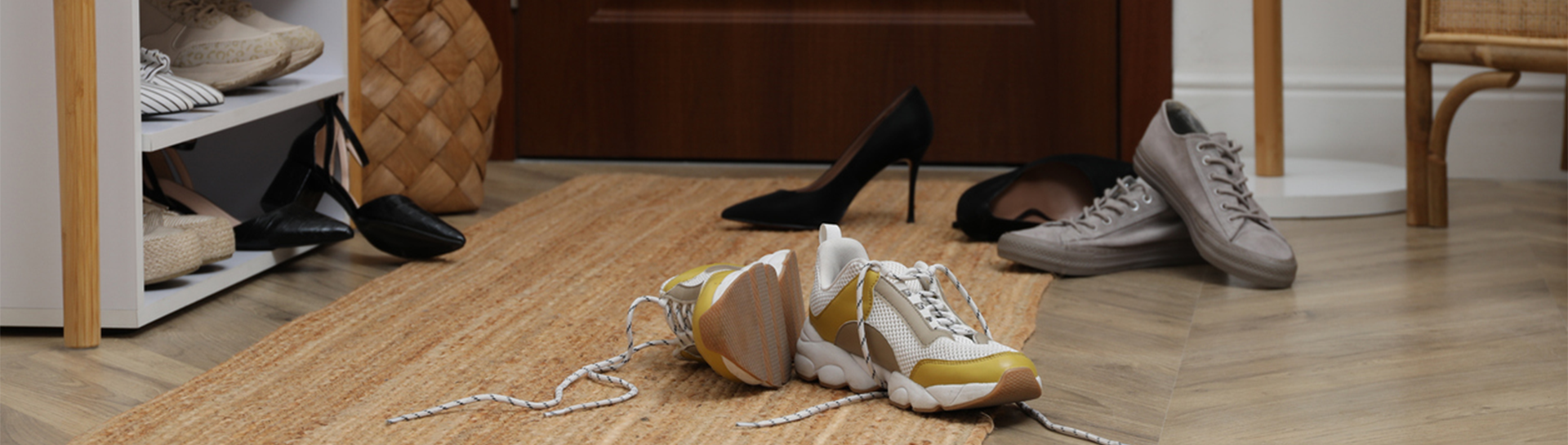
- Entry areas
- Home offices
- Garages
- The space beneath stairs
Anywhere things get set down with the intention of dealing with them later.
The 10-Minute Shift
Here is the shift. Remove one broken or unused item from your home today. Then push one stalled project one step forward.
Both actions matter and they work differently.
Removing one item sends a specific signal. When something broken or unloved leaves your space, the nervous system registers that the loop is closed. That item no longer draws your awareness each time you pass it. Its pull on your energy is gone.
Moving a stalled project just one step forward works differently but addresses the same underlying problem. It is not completion. It is motion. You signal to yourself that this is moving toward resolution rather than waiting indefinitely alongside everything else.
Both actions together shift how your space feels. Not because the room looks dramatically different, but because the nervous system registers the change.
Do this once a week. Over time, the cumulative effect surprises most people.
When DIY Is Not Enough
Sometimes this shift is immediate and noticeable. The room feels lighter. The heaviness lifts. That is confirmation that the Drain was the primary block, and that direct action on incomplete items was exactly the right response.
Other times the Drain persists. You clear items, close a few loops, and still feel that dullness settle back into certain parts of your home.
When that happens, the problem may extend beyond what is visible.
In my experience, when the heaviness persists despite genuine effort, it is almost always because something is happening in the energetic structure of the space that clearing alone cannot reach. A sector that is out of balance in a way that requires a proper compass-based assessment to identify and address.
When the foundation of a space is off, people waste time fixing the wrong things. Rooms look better but the feeling does not follow.
If the heaviness keeps returning, a Feng Shui assessment will help identify what is actually driving it.
The Right Starting Point
If the Drain named what you have been carrying, you do not need a full overhaul. You need one item removed, and one project nudged forward. Start there.
But if you have been living with this heaviness for a while and the pattern keeps rebuilding despite genuine effort, the surface fix is just the beginning. The deeper question is what your space is doing to your health and vitality. That is what a focused conversation with me can start to clarify.
If this resonates, you might also recognize yourself in one of the other energy blocks explored in
Why Your Home Looks Fine, So Why Does It Feel Off?. Each block connects directly to a specific area of life. And understanding which ones are most active in your space is where everything begins to shift.
Book a free 20-minute Feng Shui Exploration Call. It is a focused conversation where I listen to what has been happening, ask specific questions about your space, and help you understand what is most likely driving it. Most calls end with one clear priority and a genuine sense that something can actually be done. If Feng Shui is not the root issue, I will tell you that honestly.
Frequently Asked Questions About Feeling Drained at Home
Why do I feel drained at home even when nothing is wrong?
When life appears fine, but the body feels heavy or foggy at home, the environment is often the source. Broken items, unused objects, and unfinished projects create a persistent load on the nervous system. The brain tracks these open loops continuously, even after the conscious mind stops noticing, producing fatigue and making ordinary tasks feel harder than they should. To understand how the Drain connects to other energy blocks in your home, read Why Your Home Looks Fine, So Why Does It Feel Off?.
Can unfinished projects actually affect how I feel at home?
Yes. Unfinished projects are open loops. Tasks the mind holds in active attention until they are resolved. A home with several open loops creates a diffuse, low-level demand that quietly drains energy throughout the day. Moving one project forward, even a single step, reduces that load and produces a real shift in how the space feels.
What does an energy drain in a home look like?
The Drain block typically shows up as broken items kept just in case, projects stalled for months, and spaces that collect unresolved clutter. It concentrates in transitional zones. Bedroom corners, hallways, home offices, and garages. Nothing about it is dramatic, but the quiet accumulation of these items creates a consistent cost over time.
Is this a Feng Shui problem or something else?
Clearing and completion practices alone can resolve the Drain block for many people. If removing broken items and finishing projects brings lasting relief, no further intervention is needed. When the pattern rebuilds despite genuine effort, or when certain areas remain heavy regardless of what gets cleared, a Classical Feng Shui assessment can identify the underlying cause.
About the Author
Kimberly Archambault
Kimberly is a Classical Feng Shui Consultant, CFSP and the founder of Joy Feng Shui. Her passion lies in helping people create spaces that truly support who they are and what they are here to do. Through Classical Flying Star Feng Shui and BaZi, and a deeply personalized approach, she guides her clients in aligning their homes and workspaces to cultivate clarity, vitality, and a renewed sense of joy.
- Share This Article -